
Why BFSI Salesforce programs are different
Financial services organizations do not implement Salesforce the way retailers or manufacturers do. A bank's Commerce Cloud experience may need to operate alongside KYC and AML controls. A Service Cloud contact center must support data protection and regulatory processes. Professional-services teams may also need to integrate Salesforce with core banking, policy administration, or loan-origination systems that were not built around modern APIs. Choosing the wrong partner can delay delivery and create compliance risk. Experienced Salesforce Services can connect platform design with an institution's regulatory environment, core-system landscape, and operating model. This article examines how Commerce Cloud and Service Cloud apply to banking, lending, capital markets, and insurance, and what leaders should expect from a partner in a regulated environment.
Salesforce Commerce Cloud for banking, lending, and insurance
In BFSI, Salesforce Commerce Cloud can support more than a traditional storefront: digital product origination, embedded-finance journeys, and marketplaces for asset-backed lending or remarketing. Headless commerce patterns matter when a lender needs to embed a financing journey within a partner app rather than a standalone storefront. A public example from Zensar's practice is its auto-finance remarketing solution, designed to help finance organizations improve the resale process for repossessed or returned vehicles. The central question is not whether Commerce Cloud can display a financial product, but whether the end-to-end journey connects discovery, eligibility, identity, disclosure, and servicing without compromising controls or the experience.
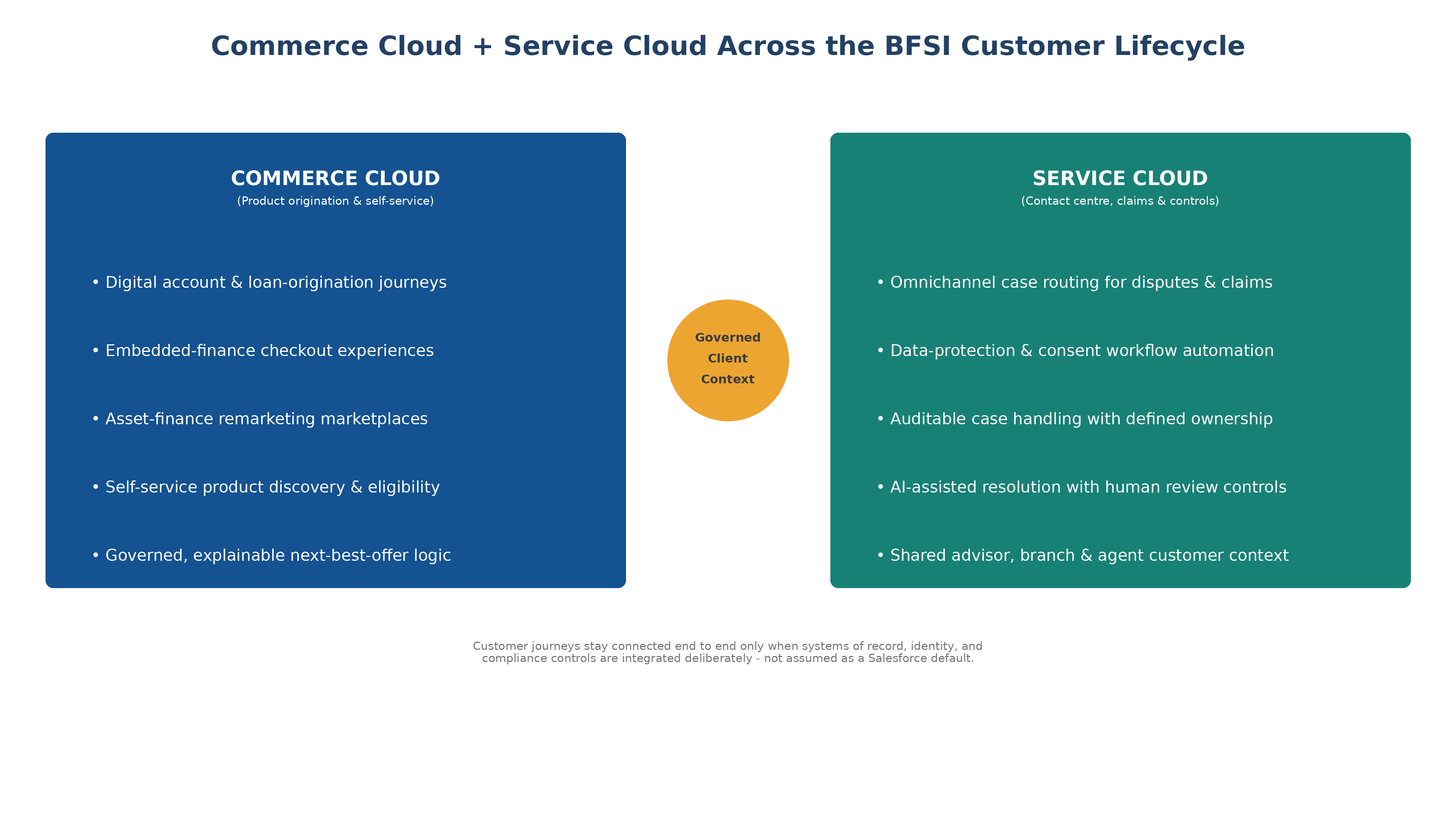
Figure 1: Commerce Cloud and Service Cloud mapped to the BFSI customer lifecycle.
Where Commerce Cloud delivers value in BFSI
Digital account and loan origination: Customers complete applications digitally, while employees focus on exceptions and high-value relationships.
Embedded finance: Financing or protection products appear within an approved partner journey, subject to eligibility and compliance controls.
Asset-finance marketplaces: Digital remarketing supports more structured disposal of returned or repossessed assets.
Cross-sell and next-best offer: Decisioning surfaces relevant products within permission-based journeys that stay governed and explainable.
Salesforce Service Cloud for regulated financial services
Service Cloud case management, omnichannel routing, and AI capabilities can support two persistent BFSI service needs: consistency and control. Disputes, claims, and KYC-related questions require clear ownership and auditable handling across channels. A public Zensar example describes a UK retail financial-services organization where the Salesforce program included GDPR-aligned processes, workflow automation, and DevOps automation. This Salesforce banking transformation shows how a platform change can be combined with process, compliance, and release improvements. AI-assisted servicing should include explicit controls for data access, human review, and escalation, as Salesforce capabilities alone do not guarantee regulatory compliance.
Where Service Cloud delivers value in BFSI
Compliant case handling: Complaints, disputes, and claims are routed, tracked, and documented through defined workflows and audit trails.
Data-protection automation: Consent, access, and retention requirements are embedded into service processes, not left to manual checklists.
DevOps-enabled releases: Governed release practices help deliver product and regulatory changes with stronger testing and traceability.
Unified advisor and agent view: Relationship managers and contact-center agents work from shared customer context when integrations are properly designed.
Professional services in a regulated environment
The greatest risk in a BFSI Salesforce program is treating it as a standard CRM rollout. The target architecture must account for core platforms, policy and lending systems, payment rails, and identity controls, with security, risk, and compliance review built into every release. A qualified implementation team combines Salesforce platform expertise with banking or insurance process knowledge and defines integration ownership, data lineage, release controls, and regulatory evidence before build activity accelerates. For wealth-management use cases, Zensar also publishes a Financial Services Cloud wealth-management solution focused on the advisor and client experience.
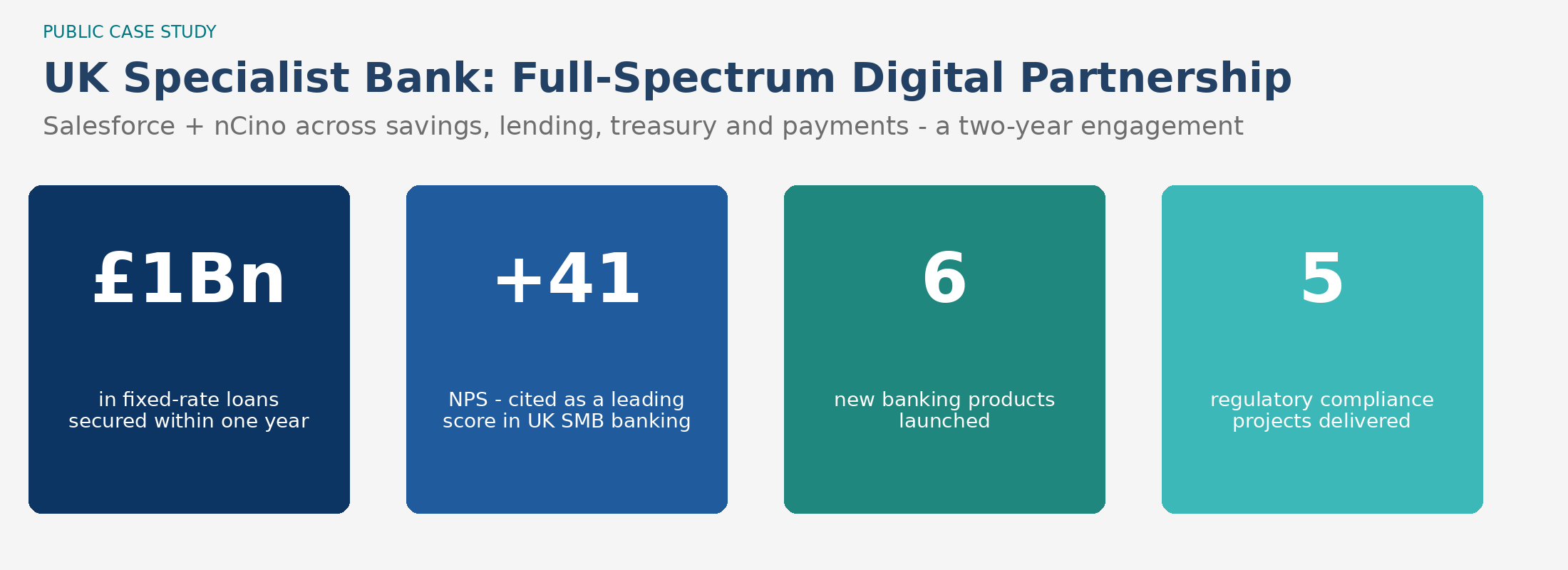
Figure 2: A publicly documented UK specialist bank engagement combining Salesforce and nCino across savings, lending, treasury, and payments.
In this public case study, Zensar's team worked across savings, lending, treasury, and payments over a two-year collaboration, helping the bank launch six new banking products and deliver five regulatory compliance projects. The bank reported securing £1 billion in fixed-rate loans within a year and reaching an NPS of +41, cited as a leading result in UK SMB banking.
How to choose the right Salesforce partner for BFSI
The standard Salesforce-partner checklist needs BFSI-specific additions:
Core-system integration experience: Evidence of work with core banking, policy administration, lending, or loan-origination systems, not only Salesforce configuration.
Regulated-industry delivery evidence: Comparable financial-services programs, approved references, and named team experience.
Compliance-by-design delivery: Privacy, security, auditability, and regulatory requirements built into architecture and governance, not added afterward.
Security and resilience: Identity, access, encryption, monitoring, recovery, and third-party dependency controls.
Long-term managed services: Support for releases, regulatory change, upgrades, incidents, and continuing adoption after go-live.
An experienced Salesforce partner should be able to explain where standard Salesforce capabilities end, where industry processes require configuration or extension, and how it will produce delivery evidence throughout the program.
Why independent recognition matters
Zensar is listed as a Leader in the Everest Group Banking and Financial Services (BFS) IT Services Specialists PEAK Matrix® Assessment 2025. Other Everest Group assessments use different categories and should not be combined into one claim. Buyers should treat analyst recognition as supporting evidence alongside delivery experience, references, and team quality.

The Zensar advantage in BFSI
Zensar's BFSI and Salesforce capabilities combine industry context, Salesforce consulting and implementation, integration, managed services, and experience engineering. Its wealth-management practice pairs Salesforce Financial Services Cloud with Zensar's Smart Advisor solution, built to help advisors manage client relationships and life events at scale. For institutions evaluating banking and financial services solutions, the key question is how the proposed team connects customer journeys with core platforms and measurable outcomes, not how many accelerators it lists.
Getting started
Whether the goal is a compliant digital-lending journey, a modernized contact center, an advisor experience, or a Commerce-plus-Service transformation, the first conversation should focus on the regulatory environment, customer journey, and core-system landscape, not the Salesforce feature list. A practical discovery phase identifies business outcomes, in-scope journeys, systems of record, data ownership, and success measures, resulting in a phased roadmap with named decision owners.
About Zensar
Zensar Technologies is a global digital transformation and IT services company and a Salesforce Summit Partner, supporting banking, lending, capital-markets, and insurance organizations through industry, Salesforce, integration, and managed-services capabilities.
Salesforce for Banking FAQs
How is Salesforce used in BFSI?
Salesforce can support customer acquisition, product origination, relationship management, customer service, complaints, claims, advisor workflows, and analytics. The exact design depends on the institution's products, systems, and regulatory obligations.
How can Salesforce Service Cloud support banking customer service?
Service Cloud can centralize cases, route work, support knowledge, and give employees shared customer context. Banks must still design appropriate privacy, security, audit, and regulatory controls around it.
What role can Salesforce Commerce Cloud play in financial services?
Commerce Cloud can support digital product journeys, embedded-finance experiences, self-service, and marketplaces when integrated with identity, eligibility, disclosure, and servicing systems.
What should banks look for in a Salesforce implementation partner?
Regulated-industry experience, core-system integration, security, compliance-by-design delivery, data governance, DevOps, managed services, and evidence from comparable programs.
Why is core-system integration important in BFSI Salesforce programs?
Salesforce journeys often depend on systems of record for accounts, policies, loans, and risk. Weak integration can create inconsistent data, manual work, and poor customer experiences.
How should financial institutions address Salesforce compliance and data governance?
Institutions should define data ownership, access, consent, retention, auditability, and evidence requirements before implementation. Compliance remains the institution's responsibility, not the platform's.
What should happen after a Salesforce implementation goes live?
Organizations should monitor adoption, data quality, controls, incidents, and performance against business outcomes, while maintaining a prioritized optimization roadmap.