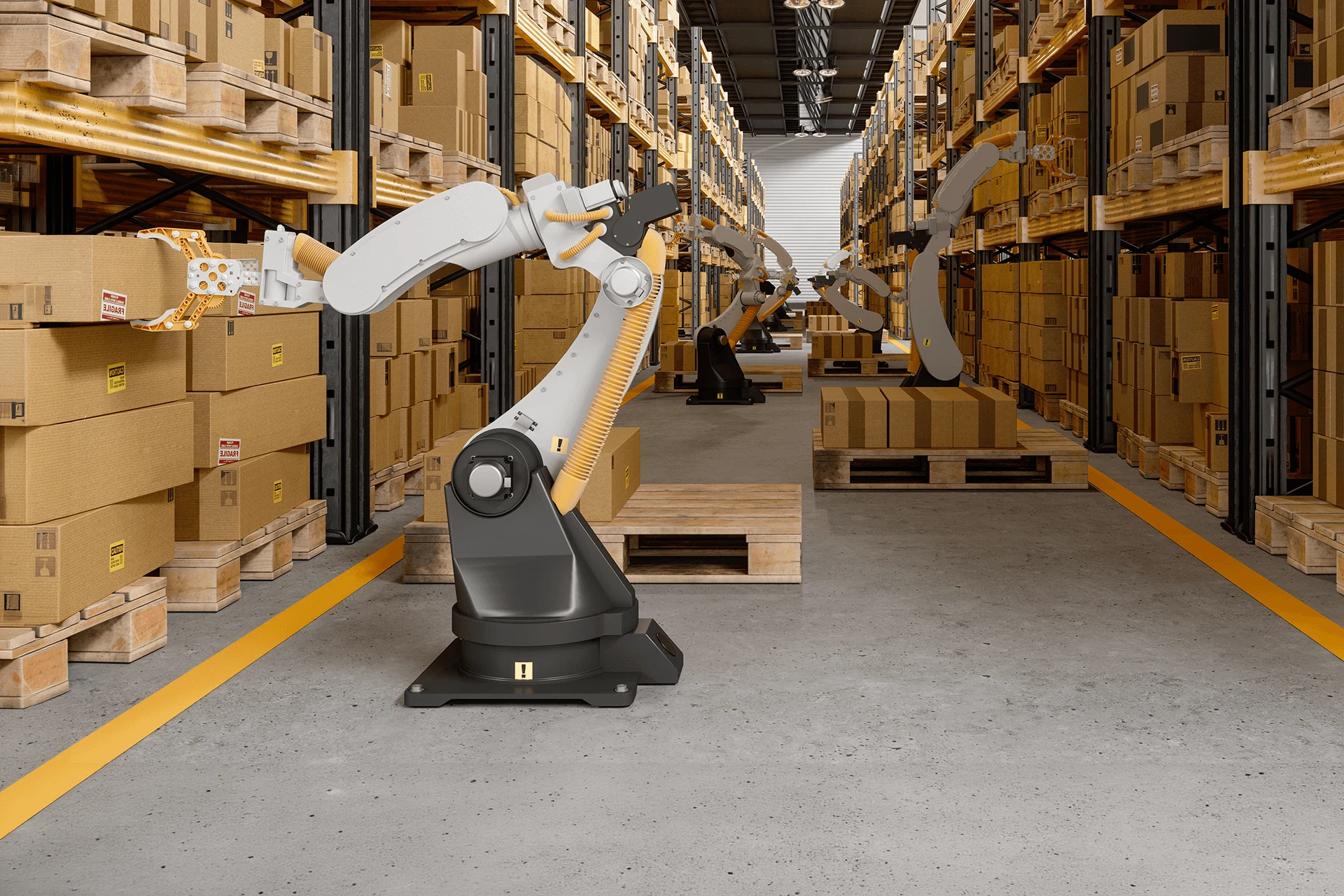
The old stereotype of the warehouse worker: someone who trudges miles, pulling a heavy cart, scanning item after item until their back begins to complain. Hard, grueling work. But the pace of that work is about to change. We’re about to enter an era of “collaborative logistics,” where the goal isn’t to replace workers but to surround them with technology to make the work less about brute force and more about finesse.
Enter the “cobot” era
The most obvious change is the introduction of collaborative robots, or “cobots.” These aren’t the enclosed, industrial monsters of the 1990s. These robots are designed to work alongside humans.
Think of it: a “follow-me” robot accompanies a picker through the warehouse. Humans handle the fine work - the picking of a delicate glass container, the retrieval of a small cosmetic item. The robot handles the menial work - hauling the heavy bin to the packing station. In this way, humans stay energized and focused on fine work while the robot does heavy lifting.
Humans remain the “brain”
There is one thing that humans are better at than robots: making sense of chaos.
Supply chains are messy. A pallet falls over, a barcode is smeared, and a customer wants to make last-minute changes to an order that requires quick judgment. Humans are perfectly suited to handle chaos thanks to:
Dexterity: Human hands remain the most sensitive instruments for handling diverse shapes and textures.
Problem-solving: When the robot hits an unexpected object it can’t recognize, it stops. When humans see an unexpected object, they move it, adjust the plan, and continue.
Quality, empathy: The robot can ensure the package is sealed correctly, but only a human can ensure it‘s properly presented to the customer.
A safer, more human workplace
The biggest prize of all is what ergonomic design does to the way work is done every day. By offloading the dull, dirty, and dangerous work onto machines, the number of injuries begins to decline. Robot exoskeletons enable loaders to pick up heavy crates without injuring their backs, and drones handle high-altitude inventory checks that used to require someone to climb a rickety lift.
When the physical toll of work disappears, warehouse work shifts from a last-resort job to a respected profession. Workers become robot supervisors, directing fleets of machines rather than being a part of those machines.
The path forward
The future of the supply chain is not about people versus machines, but about how well people and machines work together. When the precision of machines is married with the judgment of people, the result is a supply chain that’s faster, safer, and, to its core, more human than ever.
References
DHL Supply Chain - Robotics, AI & Automation Strategy (2024)
McKinsey - Digital Logistics Technology Race (Industry Report)
Research Paper (2025) - AI-Driven Robot Optimization in Smart Logistics
Industry Insight - AI Agents & Smart Warehouse Automation (2025)
Industry News - DHL Robotics Investment & Human-Robot Collaboration (2025)
McKinsey & Company - Automation in Logistics: Big Opportunity, Bigger Uncertainty